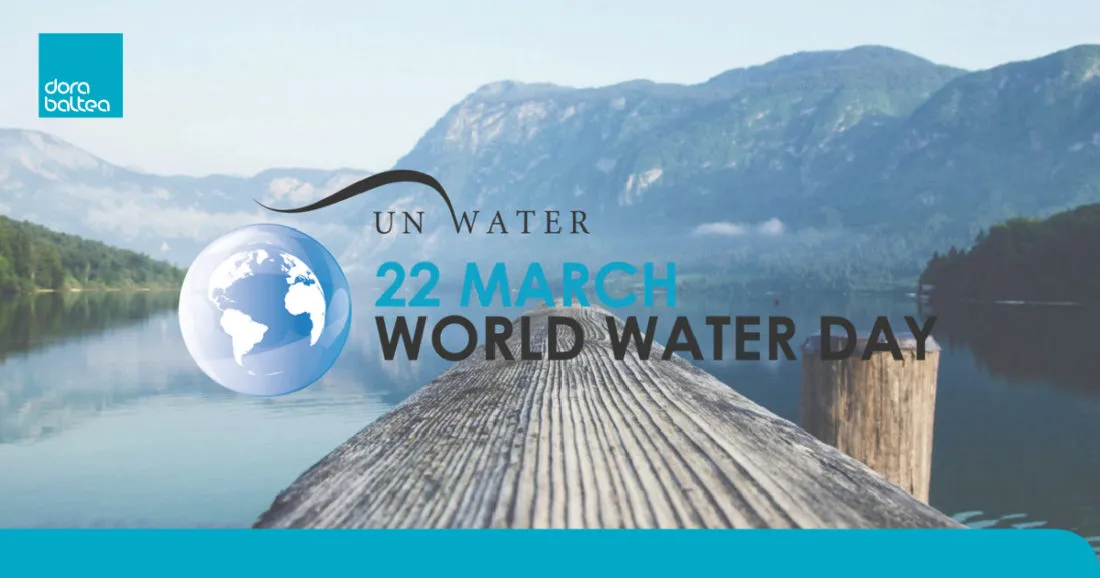
On March 22, World Water Day, is an observance established by the United Nations in 1992, and an opportunity to raise public awareness about the critical issue of water in our era.
The theme of the Day is “Nature for Water”. The proposal is to identify solutions found in nature to mitigate and reduce the widespread critical issues across the planet, from flooding to drought in certain areas or pollution, not forgetting that around the world there are still entire populations facing extreme difficulties in accessing water resources. Much has been done, but there is still much more that can and must be achieved; at the international, local, and even personal levels. In fact, even in our own society, although privileged in this regard, we can still do a lot. On a personal level, everyone in their own small way can be extremely helpful to the community. Even with small gestures aimed at saving water, such as preferring a shower over a bath, reusing the washing water from fruits and vegetables to water plants, or turning off the tap while soaping or brushing teeth. But there are many other ways, and these small measures accumulate significant value over time, as well as allowing for a considerable reduction in one’s bills! At the corporate level, regarding wastewater management, some entities are investing in a management approach more in line with the environment to promote energy savings and recycling. Actions for environmental respect are increasingly becoming an economic benefit, as evidenced by frequent examples in contemporary society. A well-defined direction is that of producing electricity from renewable sources such as solar, which allows private homes to increase their property value thanks to high energy efficiency levels A/A+. Or the production of gas from agricultural waste, which enables companies to enhance their market competitiveness and diversify their income sources. Thus, water, like all natural resources, falls under the same logic of saving/recycling/earning. Companies/homes that invest in rainwater harvesting, purification, and reuse for irrigation of wastewaterthen obtain direct economic benefits such as savings on bills, but also allow for generating a resource from water that without these treatment systems would only represent critical issues. If you are also interested in exploring the topic for your home or business, you can contact us , we will be happy to provide you with all the information you may need. We can only hope that companies and individuals continue in this “green” direction, both for the impact on the surrounding environment and for the undeniable economic advantage. Let us not forget that protecting water means improving the living conditions of every living being.