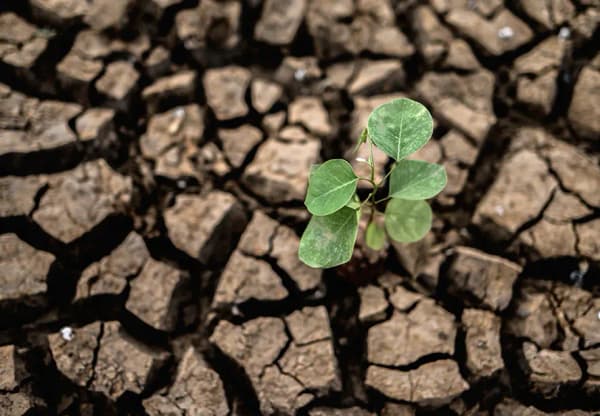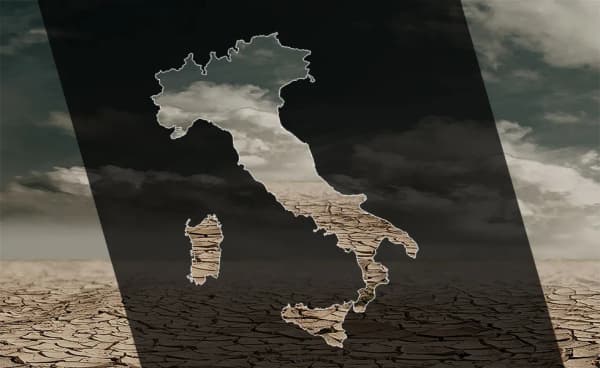
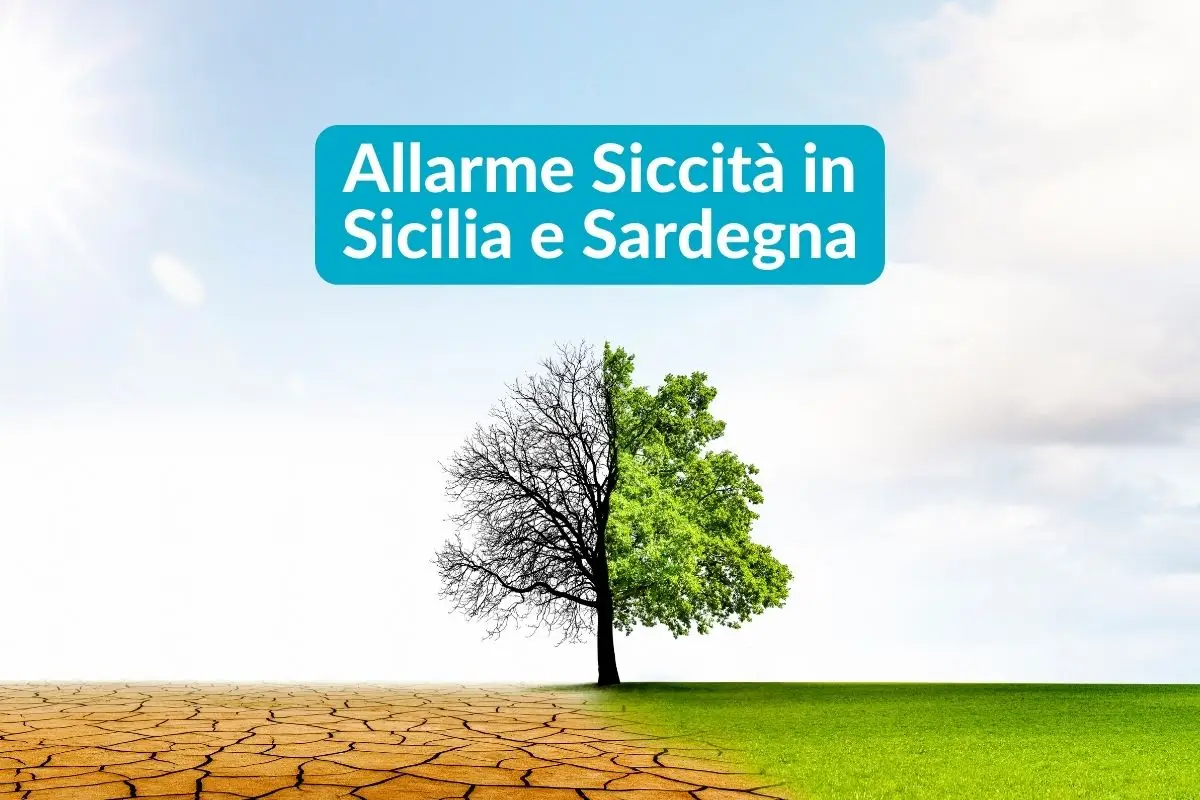
For several years now, Italy has been dealing with extreme weather events, brief but intense rains and long and anomalous periods of drought. Drought is a very serious problem considering that water is a primary necessity, and it is no coincidence that it has been dubbed blue gold. What causes this drought? Many factors, starting with climate change that has significantly reduced the length of precipitation periods in summer and their quantity in winter. Conversely, the concentration of rainfall in increasingly shorter periods leads to disastrous natural events such as floods and cloudbursts, sudden and isolated phenomena that cause extensive damage.
On one hand, continuous deforestation and hydrogeological instability favored by illegal construction have reduced nature's ability to retain water, and on the other hand, there are no adequate structures to conserve rainwater, which would be a valuable resource to exploit.
In such a context, it becomes essential torecover and treat wastewater, that is, the water used in human, domestic, industrial, and agricultural activities, which, once treated, can be used for other purposes with the aim of rationalizing water resources and reducing management costs. Treated wastewater can be reused in 3 different sectors:
- agricultural: irrigation;
- civil: street cleaning, feeding dual supply networks, feeding heating and cooling systems;
- industrial: fire-fighting water and washing thermal cycles.
Dorabaltea is providing a valuable contribution in the fight against drought thanks to the production of advanced and cutting-edge wastewater treatment plants that, in addition to recovering water, ensure prudent and green management of water resources and reduce management costs, protecting the environment for future generations. In the following paragraphs, we focus on two Italian regions, Sicily and Sardinia, which, as islands, are suffering the most from the water crisis in Italy.
Drought Alarm in Sicily and Sardinia: What is Happening?
The situation is serious in Sicily and in Sardinia where, as early as the first days of 2024, an alarm for water emergency in the islands was raised by the Anbi (National Association of Consortia for the Management and Protection of the Territory and Irrigation Waters).
As noted by the European Drought Observatory of the Copernicus Emergency Management Service, 45% of Sicily is in a drought alert condition. The orange alert, issued by the Permanent Observatory on Water Consumption in Sicily, could soon turn red if adequate solutions are not found.
In as many as 30 municipalities in the Palermo, Agrigento, and Caltanissetta areas, water rationing has been ordered. What is causing the water crisis? The unusual heat recorded throughout 2023, even in winter and autumn months, and the scarcity of rainfall. The situation is worsening, and indeed, since January 12, over 50 municipalities have been forced to ration water.
The region has been forced to reduce water supplies in the middle of winter, and it is easy to imagine that the situation can only worsen with the arrival of the spring and summer seasons. Specifically, Siciliacque, the company managing water services in the region, has been forced to reduce water flow by 10%, and in some cases even by 15% after weeks in which the reserve basins recorded water flows below the alert level.
To date, the supply from Siciliacque has already dropped from 50 liters per second to 30 liters per second. If rain does not arrive soon, citizens will be forced to further reduce water consumption. According to the Basin Authority, Sicily is the Italian region with the highest number of water losses, in a territory that is already quite complex since its natural conformation does not favor the abundance of water.
Giuseppe Amato, head of water resources for Legambiente Sicilia, is relying on the “clemency” of the weather, hoping that it will snow heavily at high altitudes and rain in the plains, so that a portion of water resources can be collected to cope with the drought.
The Causes of the Water Emergency
The climatic upheavals of recent years are now presenting the bill, which also includes the water emergency, an increasingly evident and tangible problem that cannot be ignored or postponed. The Sicilian autumn has been characterized by unusual drought, with very low and almost negligible precipitation and temperatures significantly above the seasonal average.
As of December 1, the water reserves in the reservoirs were 45.6 million cubic meters lower than a year earlier (-13%), and currently, there is a shortfall of about 54.5 million cubic meters compared to the most recent averages. A situation that is nothing short of alarming, where human intervention has played a significant role, having wiped out 95% of the natural wetlands in Sicily, a hydrogeological instability not seen anywhere else in Europe.
Unfortunately, the precarious conditions of artificial basins must also be noted, half-filled with mud, a situation favored by the lack of attention to the riverbanks that supply water to the lake. Furthermore, there are the dilapidated and obsolete distribution pipes, which cause further dispersion and loss of water into the soil.
Update 2026
The water situation in Sicily and Sardinia confirms the importance of continuous and conscious water management. After the critical issues recorded in 2024 and 2025, some areas have benefited from increased rainfall and improved stored volumes, but the issue of water availability remains central for families, agriculture, tourism, and productive activities.
National data show that renewable water resources in Italy continue to be below historical averages. For this reason, the reuse of treated wastewater should not be seen only as a response to emergency periods, but as a structural choice to reduce the consumption of primary water, enhance already used water, and make the water cycle more efficient.
The Importance of Wastewater Treatment
In light of the green policies adopted by the EU, the achievement of climate neutrality targets set for 2050 is established, which involves aenergy transition that involves abandoning fossil fuels and promoting renewable energy.
In this environmental context, the circular economy plays a significant role, specifically the reuse of wastewater. Unfortunately, a significant drought is being recorded worldwide, and the scarcity of freshwater makes intensive treatment of wastewater increasingly essential.
On one hand, it becomes essential to manage wastewater correctly, but on the other hand, it is also important to reduce emissions and consumption produced by treatment processes. This is how new solutions such as automation and digital technologies have been introduced, which, in addition to ensuring effective wastewater treatment, significantly reduce emissions.
According to the study “Energy Transition Equation” by ABB, the water treatment sector will grow exponentially in the coming years, increasing from $300 billion in 2022 to $490 billion by 2029. This growth is linked to the increase in the global population, which is expected to reach 10 billion by 2050.
To calm energy consumption and emissions caused by wastewater treatment processes, targeted solutions have already been adopted to promote virtuous supply chains for the reuse of natural resources. For even greener wastewater treatment, it is necessary to integrate automation and digitalization technologies into processes, which reduce energy costs and greenhouse gas emissions.
It is estimated that wastewater treatment sites can achieve CO2 emission reductions of 2,000 tons per year. On a global scale, considering that there are about 50,000 treatment plants in operation worldwide, the application of digital and automation technologies can ensure a potential CO2 saving of over 100 million tons.
Also noteworthy are the advantages in terms of reducing management costs of treatment plants, with savings that can reach up to $1.2 million. This virtuous path would allow companies to combine economic savings with environmental protection.
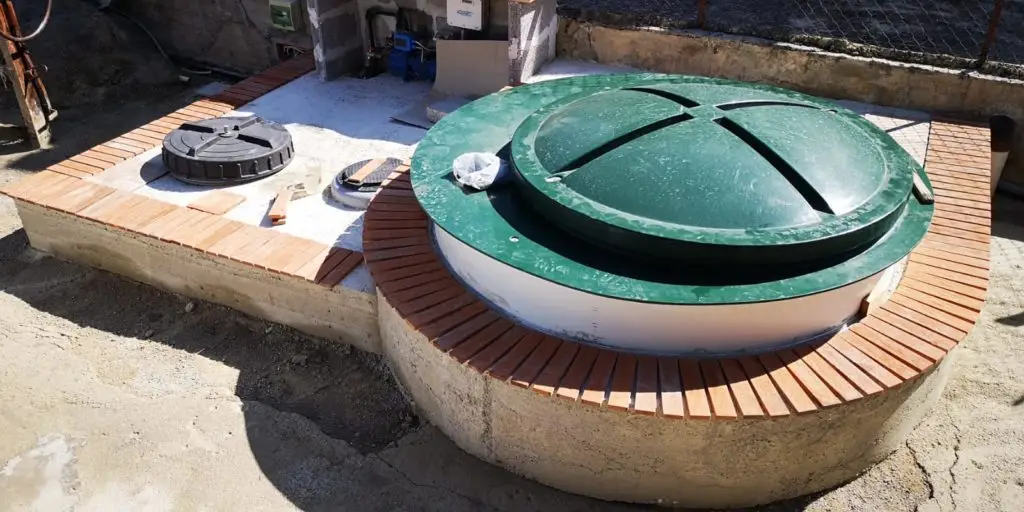
Reuse Wastewater to Reduce Consumption
Water can thus be saved by reducing consumption, and to decrease consumption, wastewater can be reused correctly. Let's recap briefly on wastewater, also known as wastewater, which is water used in human, domestic, industrial, or agricultural activities that contains organic and inorganic substances that can harm health and the environment.
We must not forget that water is a closed cycle: what we release into nature will eventually come back to us. If we discharge contaminated water into nature, we will receive contaminated water back in rivers, lakes, and seas where fish live that end up on our tables or in aquifers where we grow the products we then eat. Conversely, if we discharge clean water into nature, we will receive clean water back.
There are 3 categories of wastewater:
- domestic: wastewater from residential settlements and services primarily derived from human metabolism and domestic activities;
- industrial: wastewater discharged from buildings or plants where commercial or industrial activities take place;
- urban: domestic wastewater or the mixture of domestic wastewater, industrial wastewater, or stormwater, then channeled into sewer networks.
Waters can be collected in the following ways:
- sewers: sewer networks available to urban areas where the population lives and produces;
- surface waters: these include all those present on the earth's surface such as roadside ditches, drains, channels, streams, artificial water bodies, rivers, lakes, and the sea;
- soil and the upper layers of the subsoil: uncultivated, agricultural, or urban land;
- groundwater and subsoil: underground water tables.
Wastewater, before being released into nature, must therefore be adequately treated and purified to prevent pollution of aquifers and natural basins. Once treated, it can be used for domestic purposes, but never as drinking water, for agricultural, civil, and industrial use.
In particular, treated wastewater can be used for:
- irrigation purposes: irrigating crops intended for human or animal consumption, crops for electricity production, and for irrigating gardens, sports fields, and green spaces;
- urban purposes: cleaning streets in urban centers, washing garbage bins, and supplying cooling and heating systems (except for toilet discharge systems);
- industrial purposes: wastewater is used as water for fire-fighting systems, washing, and for industrial processing cycles, except for operational cycles that involve direct contact of treated wastewater with food or cosmetic and pharmaceutical products.
How to Reduce Water Consumption for Food Production: The Water Footprint
Humans leave various traces in the world, and one of these is the so-called water footprint, which indicates the use of freshwater by a consumer or producer and identifies the total volume of freshwater used to produce goods and services. Italy is one of the countries with the highest consumption and thus has a very high water footprint. Unfortunately, water is not renewable, so the amount of water available necessary for human survival will decrease over time.
Three small daily gestures can lead to significant water savings:
- consume local products. Transporting products from afar requires a large amount of gasoline, thus more water. Simply buying and consuming local products would limit water waste and also CO2 emissions;
- buy quality items and clothing. Fast fashion has imposed a consumer model that leads us to buy low-quality clothes and items that wear out after a few months or even weeks, increasing production that requires more water. It is therefore sufficient to purchase quality products and clothing that last a long time;
- consume less sugar and fewer sweet products. The growth of sugarcane requires a large amount of water.
In addition to these 3 simple “best practices,” which allow for reducing operational costs in production, another one can be added, namely reusing treated wastewater for the simplest daily activities, such as watering the garden and green spaces of the house.
Dorabaltea has been at the forefront in the fight against water waste for years, as demonstrated by the numerous successes that attest to and document the company's commitment in the wastewater treatment sector.
In Sicily, Dorabaltea has installed numerous treatment plants, providing essential services to thousands of equivalent inhabitants every day. In Sardinia, the company has also made a difference with the installation of many plants, ensuring daily services to thousands of equivalent inhabitants.
For more information about our treatment plants, visit the dedicated sections:
In almost 20 years, the plants of Dorabaltea installed by our clients have treated and transformed nearly 45 million cubic meters of water into a new resource, significantly contributing to a more prudent and sustainable management of water resources. Dorabaltea confirms its position as a reference company in the water sector, and the efforts made represent important steps forward in the fight against drought, with the aim of preserving the environment and natural resources for future generations.
Contact us for free consultation:
Dorabaltea Sardinia: see the office
Dorabaltea Sicily: see the office