Have you ever heard of 'water education'?
Probably not, and it may not even be the correct term, but it conveys the idea of what the relationship of every responsible citizen should be towards water resources.
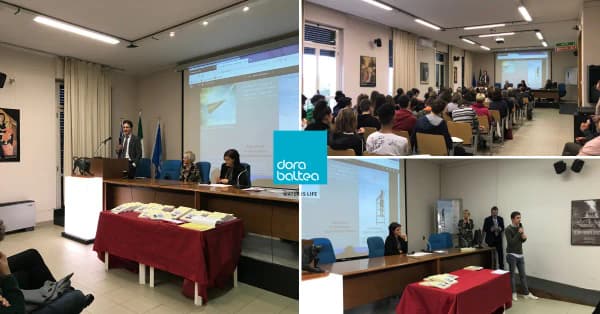
Good water management should be a civic duty that is explained and detailed in appropriate venues, certainly in schools, but perhaps also in trade associations or unions. It should be a goal of public entities to educate citizens and businesses on responsible use of water resources. It is right and necessary to intervene in cases of emergency, but it should be even more important to invest in prevention, hoping to avoid some emergencies, or at least to limit their impact and be prepared to manage their criticalities effectively.
One of the reasons that recurs every year, in more or less severe ways, is drought. Fortunately, this year the danger seems averted, instead of preventing we find ourselves hoping that spring rains will compensate for dry periods. Most of the water resource guaranteed by rain and snow is not retained and ends up, unused, in the sea, causing serious damage, especially to agriculture.
If in the public sector unfortunately a single citizen can do very little, in the private sector they can do a lot.
Nowadays, advanced and cutting-edge technologies are available that allow for extremely sustainable management of domestic wastewater with limited intervention.
For example
Thanks to this type of installation, it is possible to recover water and reuse it, for example, for irrigation of gardens, sports fields, and green spaces in general, or even for washing cars, machinery, and recharging cooling systems. Technologies that until now were mainly used for systems serving large users, but that can now also be applied to compact systems to be installed in individual homes at affordable costs.
Human life is always and necessarily related to water availability and therefore adequate management concerns everyone. It is thus fundamental to equip ourselves, as much as possible, not only with good intentions but also with tools to contribute to the search for a sustainable balance.
As much as possible, each of us should take on the right/duty to build and pass on an ethical and moral responsibility regarding water as a common good and heritage of humanity and the entire planet, to be protected for future generations and environmental balance. But also to adopt ethical and sustainable behaviors in our daily lives regarding water consumption and management, aimed at savings and recycling.
We at Dora Baltea can help you find the right technical solution, but the rest is up to you!