What can be done to combat drought? The solution is the reuse of wastewater for irrigation purposes. Find out how.
Index:
- Drought Emergency
- Environmental Pollution
- Poor Maintenance
- Drought, Global Risk for Agriculture
- What are the Real Risks for Agriculture?
- Drought, Domestic Systems with Storage of Treated Wastewater
- What is Wastewater
- Why is Wastewater Treatment So Important?
- How is Wastewater Treated?
- Solutions for Drought: Reuse of Wastewater Accessible to All
- How to Reuse Treated Wastewater?
- How to Use Treated Water for Irrigation and Wine Production?
- Wastewater Treatment Plants Available at Dorabaltea
Drought Emergency
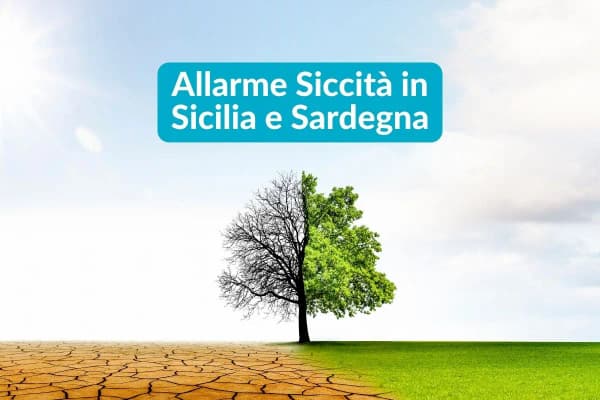
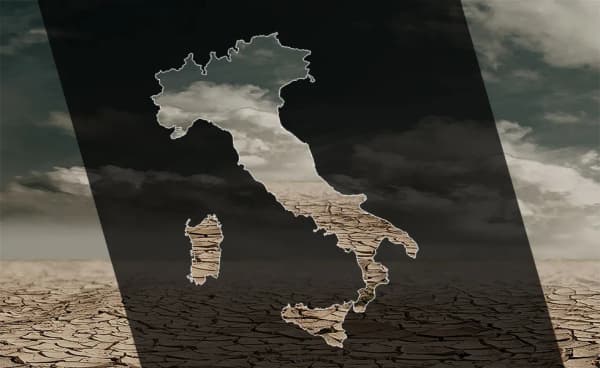
In recent years, Italy has been facing a dramatic situation due to drought, which led many regions in 2022 to even request a state of emergency. What causes the drought emergency? There is not just one reason, but a series of contributing factors that are turning all of Italy into a sort of desert.
Climate crisis, soaring temperatures, construction abuses, environmental pollution, low precipitation, and poor maintenance of the water network are just some of the causes that have led Italy, from North to South, to face a dramatic water shortage.
In Italy, the situation has worsened recently as there have been no significant precipitation for 6 months. Yet it is a paradoxical situation as Italy has more waterways than all other European countries: 7,596, including 1,242 rivers.
Many of these waterways are now dry, and some have even turned to dust. The problem is that Italian waterways have a torrential character, unlike the large European rivers. This means that if there is no rain in Italy, the rivers dry up immediately. For this reason, flooding phenomena often occur, as during heavy rainfall, the waterways struggle to absorb the water.
Moreover, globally over 75% of river and groundwater is withdrawn for agricultural, industrial, or domestic uses, while in many areas of the planet, despite being rich in water, such as Africa, there are no necessary resources to build water facilities.
Let’s analyze in detail the main causes that have led to this endemic water shortage situation.
Environmental Pollution
In agriculture today, too many chemical products are used, such as fertilizers and pesticides; large urban agglomerations produce high concentrations of fecal coliforms; heavy metals, arsenic, and dioxins come from industry.
All these elements pollute the water, as in many cities wastewater treatment plants are lacking. This is a significant gap, as there are many areas in Italy contaminated by Pfas, which includes compounds primarily used by industries.
Considering the latest UN report on water resources, we must also take into account the new pollutants from cosmetics and pharmaceuticals that treatment plants struggle to dispose of.
Poor Maintenance
Global warming and the climate crisis have certainly had a devastating impact on our planet, causing a series of upheavals that have led to a severe water shortage.
These issues have been on the horizon for some time, and nothing has been done, especially in terms of maintenance of the water network, which has been almost entirely absent.
Periodically, there is talk of water lost in the underground pipes, a problem that during periods of severe drought causes serious damage to the economy as well. However, the institutions, despite being aware of this, have never adopted the necessary countermeasures, even though Italian rivers had been dry since February, a cry for help that went unheard.
Also, very little has been done at the structural level. In Italy, there are 526 large dams and about 20,000 small reservoirs, which can store 11.3% of the rainwater, which could instead be collected in a much higher percentage. Due to poor maintenance, however, sediments accumulate, and there is not enough space for the water. The final result? An ever-decreasing water storage.
It then becomes necessary to use drinking water for daily activities, such as washing cars or cooling production plants. Yet all this could be avoided with the reuse of wastewater, which would significantly reduce water waste.
Indeed, the excessive and unconsidered consumption of water is one of the main problems that can, however, be solved immediately. In Italy, at least ⅓ of the water is wasted in distribution networks, and especially in the South and on the islands, only 50% of the water supply reaches the homes of citizens.
Since not a drop of water should be wasted, the reuse of wastewater seems to be the most feasible path at least to limit the incalculable damage caused by drought.
Drought, Global Risk for Agriculture
The drought affecting Italy is having its main effects on agriculture, one of the most important sectors for our country.
In Europe, 59% of freshwater is used for agriculture, and Italy, with its climate, is the second European country for the use of irrigation for its crops. Estimates from industry organizations regarding the damage caused by drought to Italian agriculture expected for all of 2022 range from one to three billion euros.
Drought is an emergency affecting all of Europe, but according to the Global Drought Observatory of the Jrc (the European Commission's science and knowledge service), the Po Valley is the most affected area in the European Union.
In particular, the Po Basin is concerning, where 50% of agricultural production is at risk. There is a risk of losing maize and soybean crops, products that are already hard to find due to the war in Ukraine, considered the “breadbasket of Europe.”
The causes of this drought can certainly be traced to the lack of rain, but also to an excessively passive attitude of the institutions that, although the crisis had been anticipated for some time, did not implement the necessary countermeasures.
What are the Real Risks for Agriculture?
Drought has a severe impact on agriculture at all latitudes. As we have specified, crops of maize and soybean are at risk, raw materials intended not only for human consumption but also for the livestock supply chain.
The intensive farming system, which already significantly impacts the planet, consumes over ⅓ of all water used by the agricultural sector, also for large areas of irrigated land dedicated to feed production.
All this leads us to two considerations. Without water, it becomes complicated to carry on farming, and, above all, we are using the water available to us in a completely wrong way. Therefore, it is necessary to rethink the intensive farming system and, above all, use water much more intelligently and judiciously.
The lack of water threatens agricultural land and, in general, the entire production chain of various industrial centers, especially in the Po Valley. According to estimates by Coldiretti, the lack of water could lead to a 30% drop in barley and wheat yields in Lombardy, a 30% decrease in cereal production in Piedmont, and a 25% decrease in legume production in Apulia and a 20% drop in wheat yields in Campania.
There is also another consideration: following the depletion of water sources, the levels of Italian hydroelectric reservoirs are now at historic lows. In 2021, the production of this energy provided 15% of the country's needs. This year, that production has even halved.
The war in Ukraine has also caused a spike in natural gas prices, following the recent cut in Russian supplies to Italy. Drought risks further aggravating the energy crisis, in addition to the water crisis, which inevitably impacts the entire national economy.
Drought, Domestic Systems with Storage of Treated Wastewater
In light of this devastating drought, the treatment and recovery of black and soapy wastewater seems to be not just an alternative but the only viable solution to effectively face this water crisis.
Wastewater, after adequate treatment that is now accessible to all, can indeed be recovered and reused. This means an intelligent and judicious “recycling” of water, which allows for reducing water waste and having more water available. Treated wastewater can be used for irrigation of green areas or for other types of uses, which significantly reduce the excessive and uncontrolled use of water.
What is Wastewater
If we recover wastewater, we give a big hand to the planet and, of course, to ourselves. Before understanding the methods of reuse, it is appropriate first to understand what wastewater is.
According to art. 74 of Legislative Decree 152 of 3/4/2006, wastewater is divided into 3 main categories:
- domestic wastewater. These are wastewater from residential settlements and services mainly derived from human metabolism and domestic activities;
- industrial wastewater. These are all types of water resulting from discharges from buildings or plants where commercial or industrial activities take place;
- urban. These are domestic wastewater or a mixture of domestic wastewater, industrial wastewater, or stormwater channeled into sewer networks.
The regulations also indicate the different collection methods, which are as follows:
- sewers. These are the sewer networks serving agglomerations, i.e., the area where the population lives and produces;
- surface waters. These are all waters present on the earth's surface, such as ditches, canals, roadside ditches, streams, rivers, lakes, seas, and artificial water bodies;
- soil and the upper layers of the subsoil. This refers to uncultivated, agricultural, or urban land;
- groundwater and subsoil. These are underground aquifers.
It should be noted that all the water used for daily domestic, human, commercial, and industrial activities, as well as stormwater runoff, such as evaporated or unabsorbed rain, flows somewhere until it reaches the sea.
Wastewater contains contaminating substances, in some cases toxic and harmful, and therefore needs to be treated to prevent it from causing damage to our environment, our health, and polluting the aquifers from which we draw drinking water.
Why is Wastewater Treatment So Important?
The term treatment refers to the process of purification and removal of all types of organic and inorganic pollutants and contaminants found in wastewater, which can be of domestic, urban, or industrial origin.
As already mentioned, wastewater cannot be released into nature without prior treatment, as land, sea, and lakes are not capable of receiving a quantity of pollutants exceeding their self-purification capacity.
How is Wastewater Treated?
Wastewater is treated with special treatment plants, which contain various equipment. Generally, a treatment plant has two treatment lines:
- one for wastewater;
- one for sludge.
The treatment of raw sewage from sewers unfolds in three phases:
- pre-treatment. Through this process, sedimentable organic substances, solids, and heavier materials in the water, which are present in the sewage, are removed. This step includes screening, sand removal, grease removal, and primary sedimentation;
- biological oxidative treatment. This process initiates the removal of sedimentable and non-sedimentable organic substances present in the sewage and includes aeration and secondary sedimentation;
- further treatments. These include all treatments performed upstream to achieve further refinement of the purification.
In summary, the process begins with a coarse removal of solid residues, which may include various waste, plastic bags, stones, etc. Subsequently, a more thorough and detailed purification is carried out, using mechanical methods and sophisticated chemical and biological technologies aimed at completely removing substances that dissolve in water.
One of the most interesting aspects is that wastewater, after undergoing a thorough legal purification process, can be used for various purposes that we analyze in the following paragraphs. This is certainly the shortest and most feasible path to address and partially resolve the severe water crisis plaguing Italy.
Solutions for Drought: Reuse of Wastewater Accessible to All
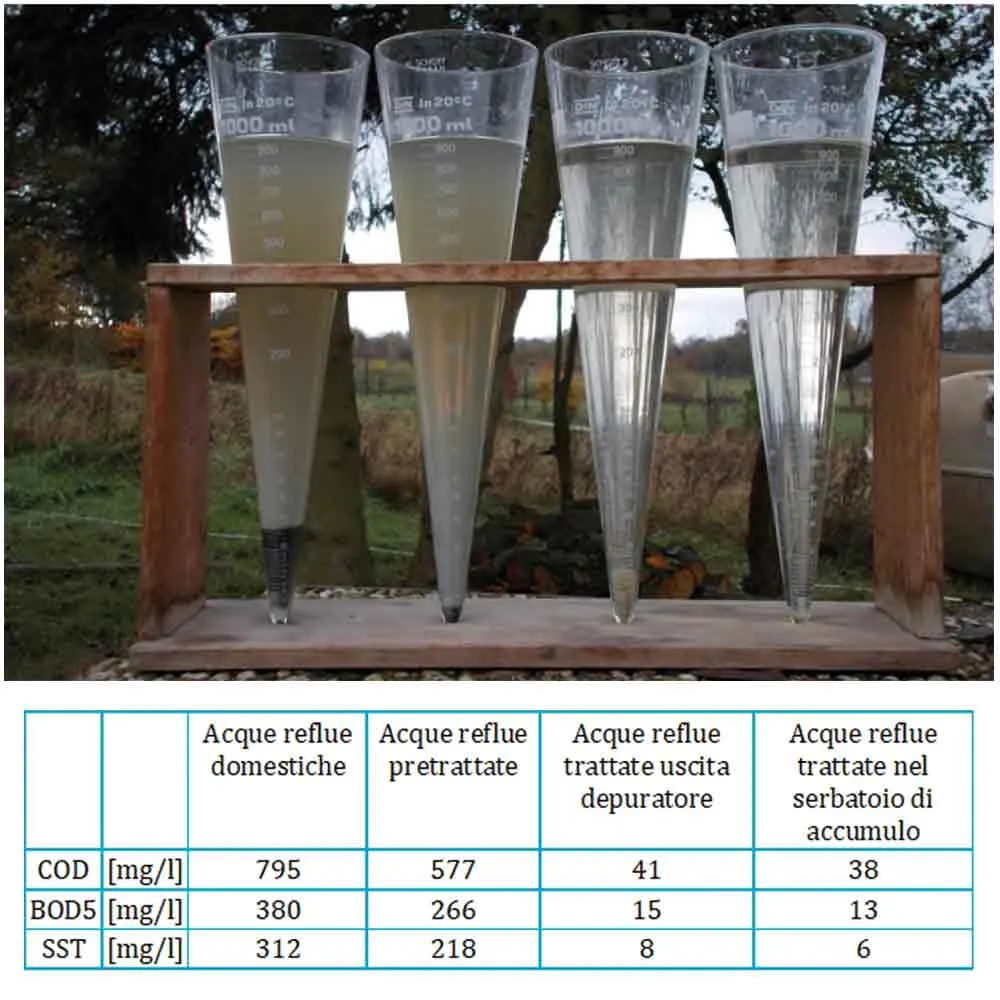
At this point, let’s analyze the various types of uses that can be made with treated wastewater. There are various types of treatment plants on the market, but the solutions proposed by Dorabaltea are truly innovative and can genuinely solve the problem of drought.
A wastewater treatment plant with EN12566 marked performance, certifying that it has clean water within the limits of DM 185/03, allows for the reuse of treated water for irrigation. The treatment plant can be connected to a drip system, or it is sufficient to have a tank to store the water and a simple hose for watering.
This solution allows for the irrigation of lawns, hedges, gardens, and trees, significantly reducing water waste, which is also more economical and easily available.
Treated wastewater is indeed available at all times as it is always flowing, unlike rainwater, which may not be available precisely due to low precipitation. In this way, one could circumvent one of the main problems of drought, which depends precisely on the lack of precipitation and thus rainwater.
Another aspect to consider is that in some cities, such as Bologna, a ban on garden irrigation has been imposed from 8:00 AM to 9:00 PM. Treated wastewater, on the other hand, is always available, so you can water your garden without breaking the law. Let’s analyze more specifically the possible reuses of treated wastewater.
How to Reuse Treated Wastewater?
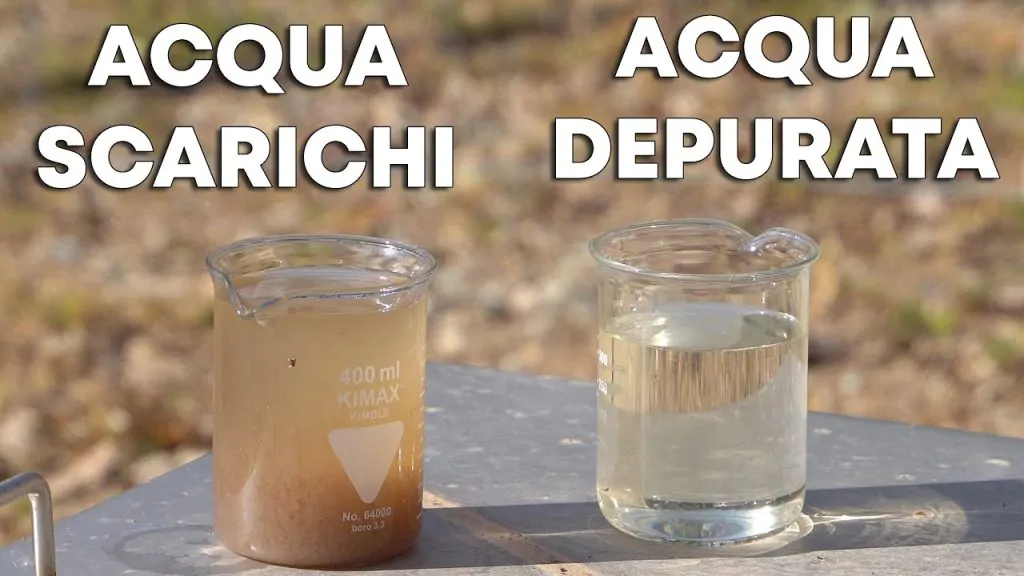
Treated wastewater can have three different uses:
- irrigation. It is used to irrigate crops intended for human or animal consumption, crops for electricity production, or for the irrigation of gardens, sports fields, and green spaces in general;
- urban. For cleaning streets in urban centers, for washing garbage bins, for supplying cooling and heating systems, except for toilet discharge systems;
- industrial. In this case, treated wastewater can be used as water for fire-fighting systems, washing, and for industrial processing cycles, except for operational cycles that involve direct contact of treated wastewater with food or cosmetic and pharmaceutical products.
When it comes to agricultural irrigation, the use of treated wastewater can be very varied, and to give an example, let’s analyze in the following paragraph the use of wastewater for wine production.
How to Use Treated Water for Irrigation and Wine Production?
Italy is one of the world's leading wine producers, and for wine production, water is an essential and irreplaceable raw material that nourishes the vine.
The wine production process requires a very high water consumption, which in turn generates a huge amount of wastewater discharged. On average, the water consumption is 1.3 liters of water per kilogram of processed grapes. In essence, to produce one liter of wine, about 1.8-2 liters of water are needed.
An average that increases during the harvest phase when there is a greater water requirement, which can vary depending on the machinery and washing methods, which is estimated to be roughly double the volume of wastewater compared to the volume of wine; for example, a 10-hectare vineyard that produces 1000 quintals of grapes can consume over 140,000 liters of water per year for processing (this value excludes irrigation needs).
We are talking about “monstrous” consumption, so careful consideration is required regarding the discharge methods of wastewater, which necessitate the introduction of effective treatment systems capable of recovering wastewater in accordance with the law and benefiting the surrounding environment.
With a high-performance treatment system from Dorabaltea, it is possible to transform wastewater into a new resource to be used for the irrigation of green areas with a positive impact on nature.
Moreover, today there are various wastewater treatment solutions on the market, as there are plants that operate with or without electricity, thus meeting the various needs of users. At negligible costs, there are also interconnected treatment plants available for domestic homes, manageable remotely, providing the possibility of having your system within your “cell phone.”
Another very important aspect to highlight is represented by the tax deductibility of treatment plants, which ensure a 50% tax deduction, effectively halving the initial cost for purchasing a wastewater treatment device.
The treatment of wastewater allows for circumventing the problem of drought, significantly contributes to reducing pollution, and represents a great economic advantage. The purchase of a treatment plant, in addition to being a regulatory obligation, should be seen as an investment in the short term but also in the medium and long term, ensuring tangible benefits for a lifetime.
Wastewater Treatment Plants Available at Dorabaltea
Dorabaltea has launched two innovative products on the market: Biowater and Atlas. Let’s analyze in detail the operation of these two innovative devices.
Biowater is a plant without electricity and can treat 200 liters per person per day. This means it can irrigate 65 square meters of garden every day. The device is equipped with EN 12566-3 marking and DoP, the European certification for civil and/or assimilated wastewater treatment plants under 50 AE. These certificates ensure that Biowater complies with the guidelines of the Italian legislation D. Lgs. 152/06 and the Regional Regulations for discharge into surface waters, soil, and subsoil.
Atlas is an equally innovative device that utilizes patented technology with vertical labyrinth flow, ensuring an extraordinary level of efficiency and reliability. Tests conducted at the PIA of Aachen, the most important notified European body, have certified the excellent efficiency of pollutant removal. This device can treat up to 800 liters per day and irrigate 265 square meters with treated water.
Dorabaltea's water treatment systems are designed for domestic environments and agricultural businesses.
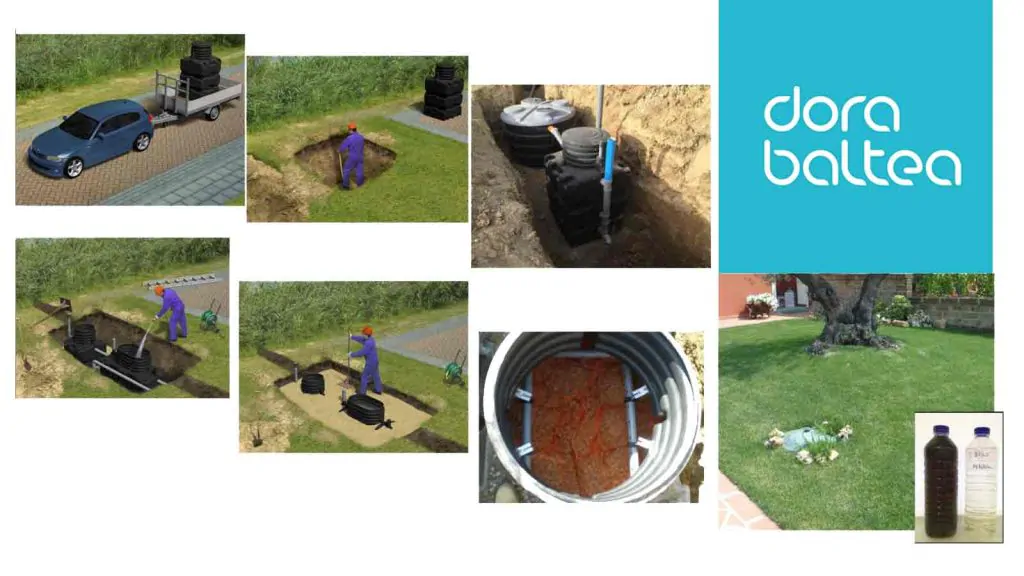
In particular, domestic treatment plants can be installed in a couple of days and recover all filtered wastewater through components and natural rock fibers. In practice, through this process, wastewater is not wasted but, filtered through rock fibers and biologically treated, exits in a completely clean pit and is then stored for irrigation of the garden or for other types of use.
The purchase cost of a domestic treatment plant serving a single dwelling can range depending on the model and included accessories from €2,990 to €4,990 + VAT, which varies from 4% to 10% depending on the customer's building title. By benefiting from a 50% deduction on IRPEF, it is possible to receive a contribution from the State over the years amounting to half of the total price.
What is the difference between electricity and water?
Electricity is bought, consumed, and paid for; treated water from a Dorabaltea treatment plant is bought, consumed, and reused, and it is FANTASTICALLY ECONOMICAL.
By spending just a little more than a boiler, one can have a wastewater treatment system that brings the following advantages:
- be compliant with the law for discharge outside the sewer
- have water available for garden irrigation every day for FREE
- increase the value of one’s home and/or business
- allow one’s family to live in a healthy environment free of viruses