Insulating a septic system or a domestic wastewater treatment plant can be beneficial in cold climate countries, in order to keep the temperatures inside the tank sufficiently high and prevent the freezing of effluents.
Maintaining temperature ensures active digestion and an efficient wastewater treatment process.
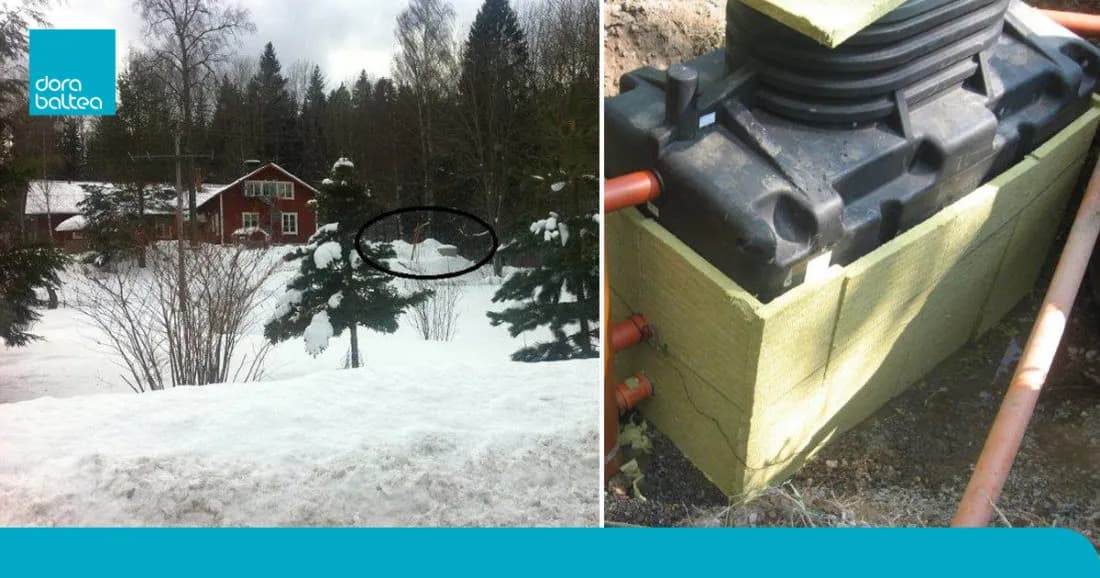
The bacterial activity that leads to purification can indeed decrease with lowering temperatures: bacteria become dormant when the temperature inside the plant drops below 4°C. To avoid this, the external walls of the treatment plant, the covers, and possibly the risers can be insulated using appropriate construction materials. There are various options: first of all, an insulating board can be placed above the plant as well as on the sides of the tank before startup. At the same time, to ensure proper insulation of the side walls, these can be wrapped in flexible insulation material. Special attention should be given to the most sensitive and exposed parts of the plant, namely the covers. Manufacturers of wastewater treatment plants may offer septic systems already equipped with pre-insulated covers. Alternatively, insulation can be added on-site by the contractor responsible for the installation. The depth of installation of the septic system in the ground is also important. Tanks should ideally be buried at a minimum depth of 500mm below ground level, outside the freezing zone, to ensure the efficiency of the wastewater treatment system even in cold climates. If the plant is positioned closer to the surface, greater insulation may be necessary. The use of spray insulation can be considered for better coverage of closure points. This additional measure, in case of harsh weather, will ensure that cold air does not enter the plant, thus preventing the risk of freezing in the water distribution pipes and possibly also in the liquids inside the tank. Some recommendations, in conclusion, on the materials to use: the chosen insulation must have suitable characteristics regarding burial and water resistance. A high R-value of the insulation material will allow for better thermal performance in the treatment plant. If you need personalized advice or wish for further insights, or want to ask us any questions about your specific case, send us a message by filling out the form in the Contact section or call us at +39 0575 20945. For further insights on this specific case: BIOROCK website