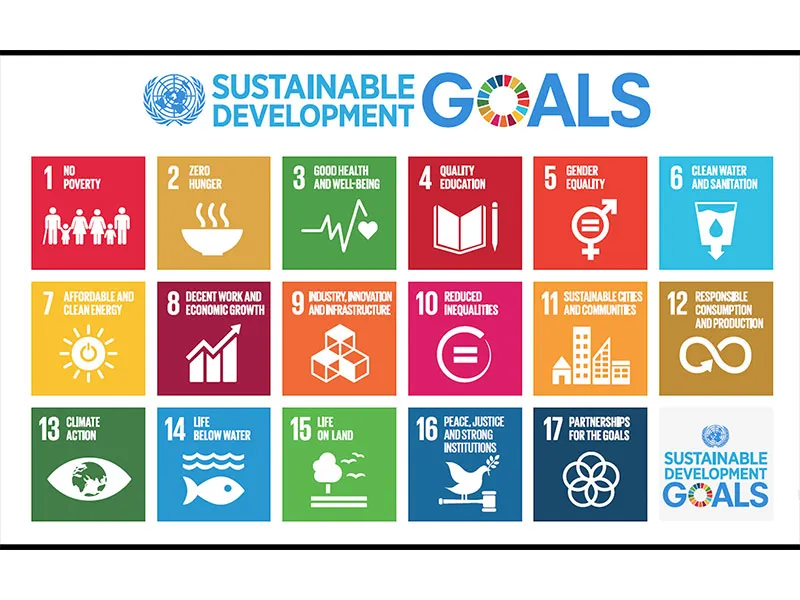
The official launch of the Goals for Sustainable Development (set out in the 2030 Agenda) at the beginning of 2016 marked the path to follow over the next 15 years: countries around the world have committed to achieving them by 2030.
From the report “Italy and the Sustainable Development Goals” by the Italian Alliance for Sustainable Development (Asvis), however, encouraging results do not emerge: “Despite progress made in some areas over the past few years, Italy is not in a condition of sustainable development as defined by the 2030 Agenda adopted on September 25, 2015, by the 193 UN member countries. With current trends, Italy will not be able to meet either the targets to be achieved by 2020 or those set for 2030, unless there is a radical change in its development model.”
The report also presents some proposals to bring our country onto the path of sustainable development as quickly as possible.
For example, it lists measures already under examination by Parliament but still to be approved (Draft Law: “Principles for the protection, governance, and public management of water”; Draft Law on “land consumption” and “Law for the promotion and regulation of Fair Trade”) and strategies to adopt (Energy, Circular Economy).
Specifically discussing the 17 goals of the 2030 Agenda, it is worth mentioning Goal 6 “Ensure availability and sustainable management of water and sanitation for all”: the ASviS report once again highlights a serious management incapacity of water resources in various regions and areas of our territory.
“In 2015, 38.2% of the water introduced into the drinking water distribution networks of provincial capitals was lost, with an increase of over two percentage points compared to 2012 (35.6%). The actual daily loss, net of measurement errors and illegal connections, amounts to about 50 m3 for each km of distribution networks, which is a volume that, estimating an average consumption of 89 m3 per year per inhabitant, would satisfy the water needs for a year of 10.4 million people. Regarding the potability of water, in 2016 it was confirmed that 30% of families do not trust drinking tap water.”
The journey has just begun, and the delay already accumulated by our country does not bode well. The road is still long, but there is much to be done: it is time to act.
For further insights, consult the Asvis report “Italy and the Sustainable Development Goals”.