Perhaps the right questions would be: "How much water is wasted?" and "Can we do something?
Yes, you understood correctly, today we will talk about domestic wastewater. We will not analyze the public situation, broad and complex, which still presents scenarios that can be improved, but we will focus on aspects closer to our daily lives of all of us, on domestic wastewater, on what we can do daily, with small but smart gestures, and on how the construction market is moving towards a perspective of savings and recycling.
Unfortunately, the starting data is not very positive: about one in two Italians does not take care of dripping faucets (52%), or lets water run while washing food and dishes (47%), or uses appliances recklessly (32%). Half of the population in our country (49%) shows "carelessness regarding water waste". (as explained by a study from the website "In a Bottle" -www.inabottle.it)
More attention, therefore, primarily to daily routines. A single gesture can have a minimal impact, but a more rational and forward-thinking behavior in the long run can mean a significant impact on the environment around us (as well as on bills at the end of the month!). If we look at the per capita consumption of drinking water, it is 425 liters per day in the USA, and 10 liters in Madagascar, while for Italy it is 241 liters per day. With this data, Italy confirms its position as the highest in Europe for per capita water consumption, while the European average is 180-190 liters.
With good practices and innovative technologies, it could be possible to reduce those 241 liters per day to about half.
But beyond the “grandma’s advice” or the simple measures we can implement depending on our habits, a consciousness that starts upstream is necessary, starting from the design of the living environment, with adequate and functional management of domestic wastewater aimed at reusing it in various ways such as toilet flushing, irrigation of green areas, washing cars or machinery.
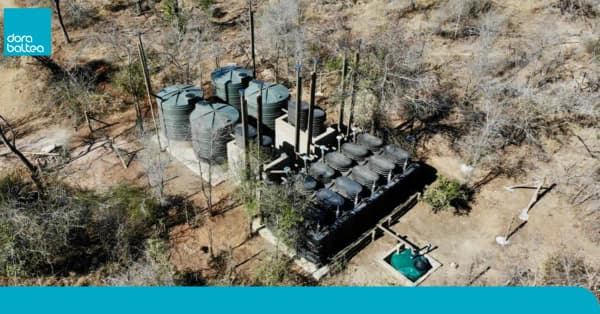
A good purification system can indeed allow the channeling of discharges according to the continuity of flow, the final discharge destination (sewer, surface water body, or soil) and the number of users. To have an efficient domestic wastewater purification system, it is necessary to size it and think of it as a whole, considering both primary and secondary treatments. For this, there are companies like ours, capable of offering all the necessary consulting to design and implement your system.
Sustainability, green architecture, building with low impact. How do these concepts translate into practice? Is it really possible, but above all profitable and economically sustainable, to operate in these areas of action?
To start getting an idea of how a certain building or structure can or cannot align with what is now called “green building,” certifications are emerging that aim to provide guarantees on various aspects of the project: from construction materials, to energy consumption, to combating pollution.
Currently, at the international level, the reference certifications are three:
LEED (Leadership in Energy and Environmental Design), born in the United States and now widespread worldwide.
BREEM (Building Research Establishment Environmental Assessment Method), founded in 1990 in England.
DGNB (Deutsche Gesellschaft für Nachhaltiges Bauen), for Germany,
Of these certifications, the first one active in Italy is LEED, which since April 2011 establishes a common standard of measurement and promotes practices for eco-sensitive design.
It includes six environmental categories: Site Sustainability, Water Management, Energy and Atmosphere, Materials and Resources, Indoor Environmental Quality, Innovation in Design, and Regional Priority.
There are four certification levels, depending on the score achieved: Base, Silver, Gold, and Platinum.
But how is the economy of those investing in these sectors doing?
“Green” construction has grown from +2% in 2005 to +10-12% in 2008, and is expected to reach 38-47% by 2018.
Building while saving energy and safeguarding environmental and human well-being is thus the future of construction, opening interesting employment prospects and allowing small businesses and startups to discover new market areas.
More than the future, it is already the present.
If you are thinking of implementing your system or just want to learn about the possibilities that the market can offer today in the field of domestic wastewater, contact us without obligation. One of our consultants will be at your disposal.