Index
Industrial wastewater (industrial discharges) what are they?
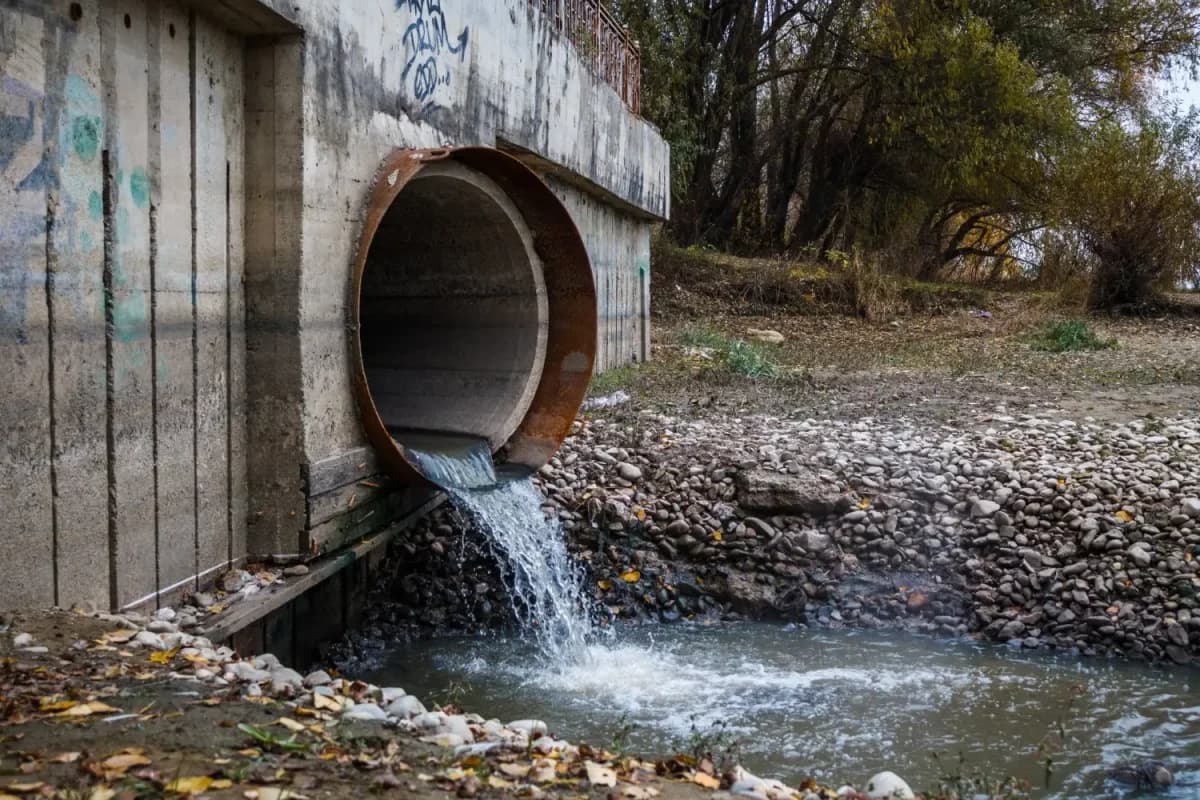
Industrial wastewater is considered to be that water which, as a result of human activity after use in agricultural and industrial activities, becomes contaminated and therefore no longer usable directly, as it poses a danger to public health and the surrounding environment in general. For this reason, it cannot be reintroduced into the environment, which would not be able to effectively dispose of the pollutants present. In practice, this would seriously compromise the normal balance of the surrounding ecosystem.Pollutants present in industrial wastewater:
- Floating substances such as oils, fats, foams, and all lighter insoluble compounds in water
- Suspended substances, i.e., those insoluble substances that have a density equal to or greater than that of water, kept in suspension by turbulence
- Colloidal substances, composed of particles of such sizes that they cannot be separated from water by any treatment
- Dissolved substances, dispersed in ionic or molecular form in water
The difference between domestic and industrial wastewater
We can identify 4 types of wastewater:💧
Domestic wastewater
Produced within residential settlements, from domestic activities and human metabolism. They are mainly characterized by organic contaminants.
🏭
Industrial wastewater
Originating from buildings and plants where commercial activities or production of goods take place, which differ from domestic wastewater and rainwater runoff. In practice, this includes all those originating from commercial or industrial environments.
🏙️
Urban wastewater
Considered as domestic wastewater or the mixture of domestic wastewater, industrial wastewater, and rainwater runoff, conveyed in sewer networks and originating from urban areas.
🔄
Industrial wastewater comparable to domestic
Wastewater that, although originating from industrial or commercial activities, has qualitative characteristics similar to domestic wastewater, as established by specific regional regulations.
The main difference between domestic and industrial wastewater lies in their origin and source: the former is of domestic nature, while the latter is discharged from buildings or plants where commercial activities or production of goods take place.
It should be noted, however, that all wastewater with similar characteristics as indicated by regional regulations is considered domestic wastewater. Among wastewater, industrial ones could theoretically also fall under regional regulations.
This means that industrial wastewater is not identified so much according to qualitative criteria, but rather by origin. Regions indeed have the authority to indicate the qualitative characteristics deemed comparable to domestic wastewater.
Important legal note
A further clarification on the matter comes from Cass. III Pen. n. 35870 of September 3, 2004, which established that the difference between domestic and industrial wastewater is not determined by the level or nature of pollution, but by the nature of the activities from which they originate.
Judicial example
According to Cass. III Pen. n. 978 of January 20, 2004, ric. M., industrial wastewater from a body shop must be considered industrial wastewater and not comparable to domestic wastewater, as it is not related to human metabolism nor originating from domestic activities.Industrial wastewater: The regulations
Regulatory definition
The official definition of industrial wastewater is contained in Article 74, paragraph 1, letter h) of Legislative Decree 152/2006 (Environmental Consolidated Law). According to this regulation, they are classified as industrial wastewater "any type of wastewater discharged from buildings or plants where commercial activities or production of goods take place, different from domestic wastewater and rainwater runoff." This classification is fundamental for determining the applicable authorization regime and treatment obligations prior to discharge. Industrial wastewater is subject to specific and more stringent regulations compared to other types of water discharges.
- The indication of the quantity and quality of the discharge and the annual volume of water to be discharged
- The type of receptor
- The identification of the point designated for control sampling
- The description of the overall system of industrial discharges, including the operations connected to them
- The possible flow measurement system for discharges, if required
- The indications of the equipment used during the production process and in the discharge systems, as well as the purification systems used to ensure compliance with emission limit values
In specific cases provided for by regulations, it is necessary to indicate:
- The production capacity of the individual industrial facility that determines the production, transformation, or use of specific substances, or the presence of these substances in the discharge.
- The hourly water requirement for each production process.
Industrial wastewater: Discharge authorization
Discharge refers to the introduction of wastewater carried out with a stable collection system that connects the wastewater production cycle with the receiving body, such as surface waters, soil, subsoil, and sewer network, regardless of their polluting nature.1
Mandatory authorization
All discharges, both for the treatment of industrial water and domestic water, must be authorized by the competent authority and comply with the limit values indicated in differentiated tables.2
Discharge prohibitions
All discharges into the subsoil, from any civil or industrial activity, are prohibited. Generally, discharges onto the soil or onto the surface layers of the subsoil are also prohibited, except for domestic discharges and those resulting from industrial and urban activities, where it is technically impossible or too costly from an economic point of view to discharge into surface waters.3
Request procedure
Regarding the authorization for the treatment of industrial wastewater, one must contact their relevant municipality, using the prescribed forms. Two revenue stamps of 16 euros are required: one to be applied to the application and one to be applied to the authorization that will be subsequently issued.
The application for industrial discharge authorization for a new establishment must be submitted simultaneously with the submission of the building practice. The application for discharge authorization, for a new discharge and/or for modifications to the industrial wastewater treatment plant system, must be submitted 90 days before the commencement of the works. The response time is 90 days.
It is important to know, however, that the purification process of industrial wastewater is regulated independently by each individual region and its ARPA guidelines. It is then up to the Provinces to issue discharge authorizations into surface watercourses, soils, or surface layers of the subsoil and groundwater.
All data and information related to discharges are collected in specific databases, in order to accurately identify and locate discharges to understand potential sources of pollution and the main detected pollutants.
With the aim of proper management and monitoring of authorizations, the Provinces may periodically conduct censuses of all discharges into surface watercourses, through specific investigations aimed precisely at identifying discharges that flow into the various watercourses. The goal is to establish the origin, nature, and territorial position of the discharges and verify their authorization status and holders.
The ATO (Optimal Territorial Area) technically evaluate the requests for discharge authorization into the sewer, while the discharge authorization is issued by the Province.
Industrial wastewater: Purification systems – Recycling
After analyzing the regulatory aspect of the purification of industrial wastewater, it is appropriate to analyze the ecological issue. Wastewater is still water, a precious resource that is rightly referred to as "blue gold." Indeed, even wastewater can be recycled.Advantages of wastewater recycling
All this translates into a significant reduction of environmental impact, better protecting the surrounding nature. Furthermore, companies equipped with specific certified industrial wastewater treatment plants can significantly reduce costs and comply with regulations.Tax incentives
Industrial wastewater treatment plants are also included among the instrumental goods for industries and companies, for which it is possible to benefit from the tax credit provided by the National Transition Plan 4.0 and the New Sabatini Law.
Purpose of use after purification
✓
Irrigation use
They are used to irrigate crops intended for human or animal consumption, crops for electricity production, or for the irrigation of sports fields, gardens, and green areas in general.
✓
Civil use
They are used to clean the streets of urban centers, to wash garbage bins, to supply cooling and heating systems, except for toilet discharge systems.
✓
Industrial use
They are used as water for fire-fighting systems, washing, and for industrial processing cycles, except for cycles that bring treated wastewater into contact with food or cosmetic and pharmaceutical products.
Industrial water treatment plants
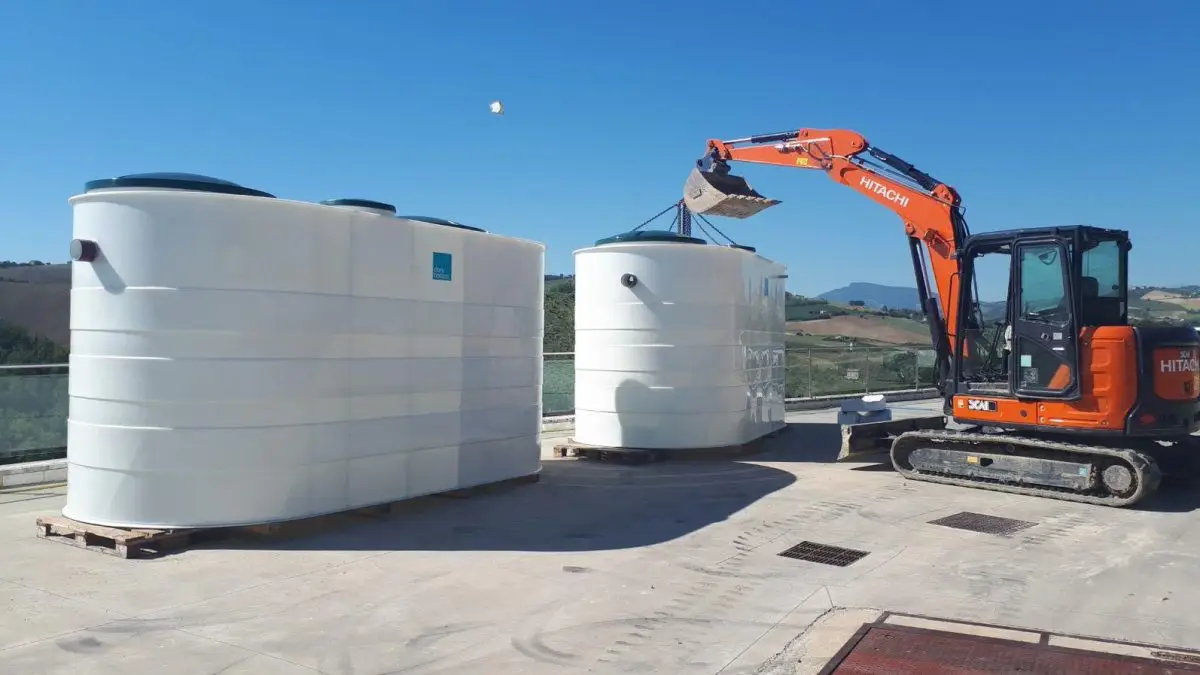
ATLAS AT OVAL monoblock system
Highly reliable system designed for the purification of domestic and similar wastewater, originating from medium/large residential or accommodation users. This device guarantees high performance for water purification and reduces footprint thanks to its compact design.
Advantages of the ATLAS AT OVAL system:
- Monoblock system and very low installation costs
- No odor
- Very low noise level
- Low maintenance and management costs
- No internal moving parts subject to wear
- Rare interventions by the vacuum truck due to low sludge production
- Self-activating biological processes
- Reactivity to daily peaks
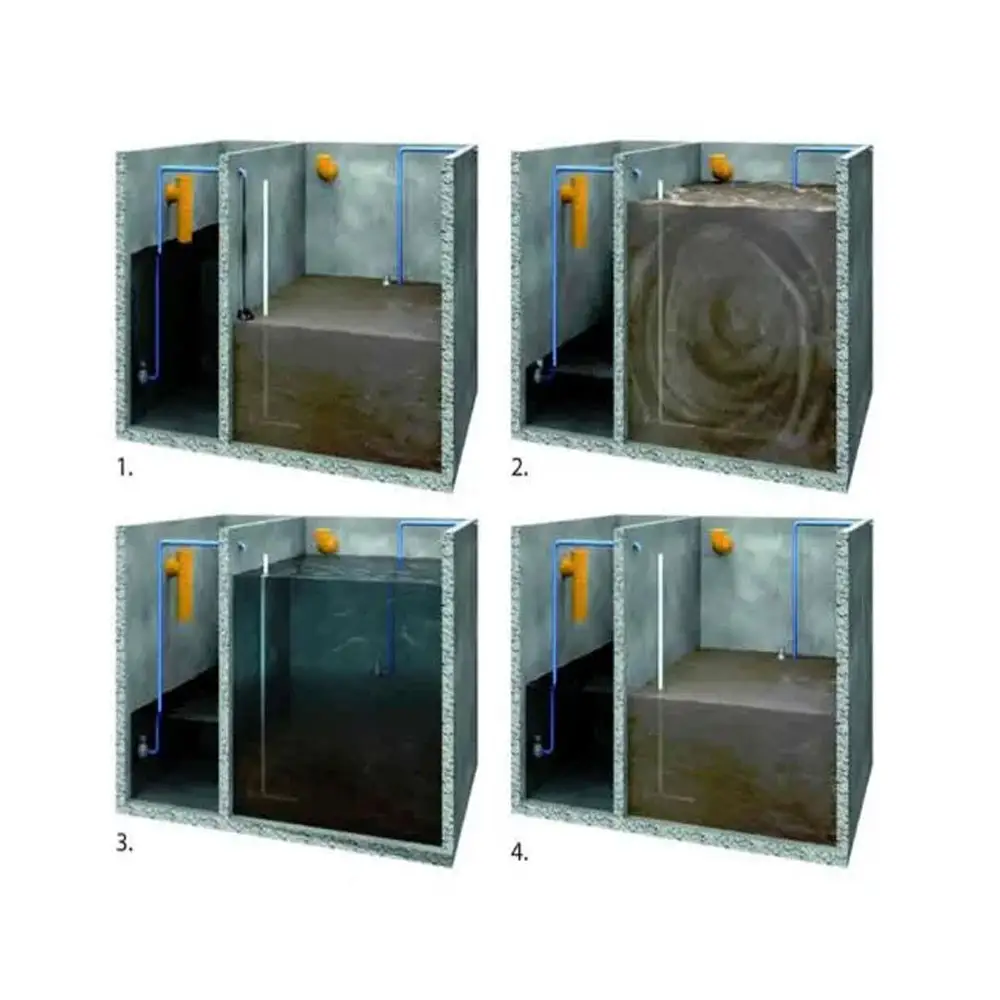
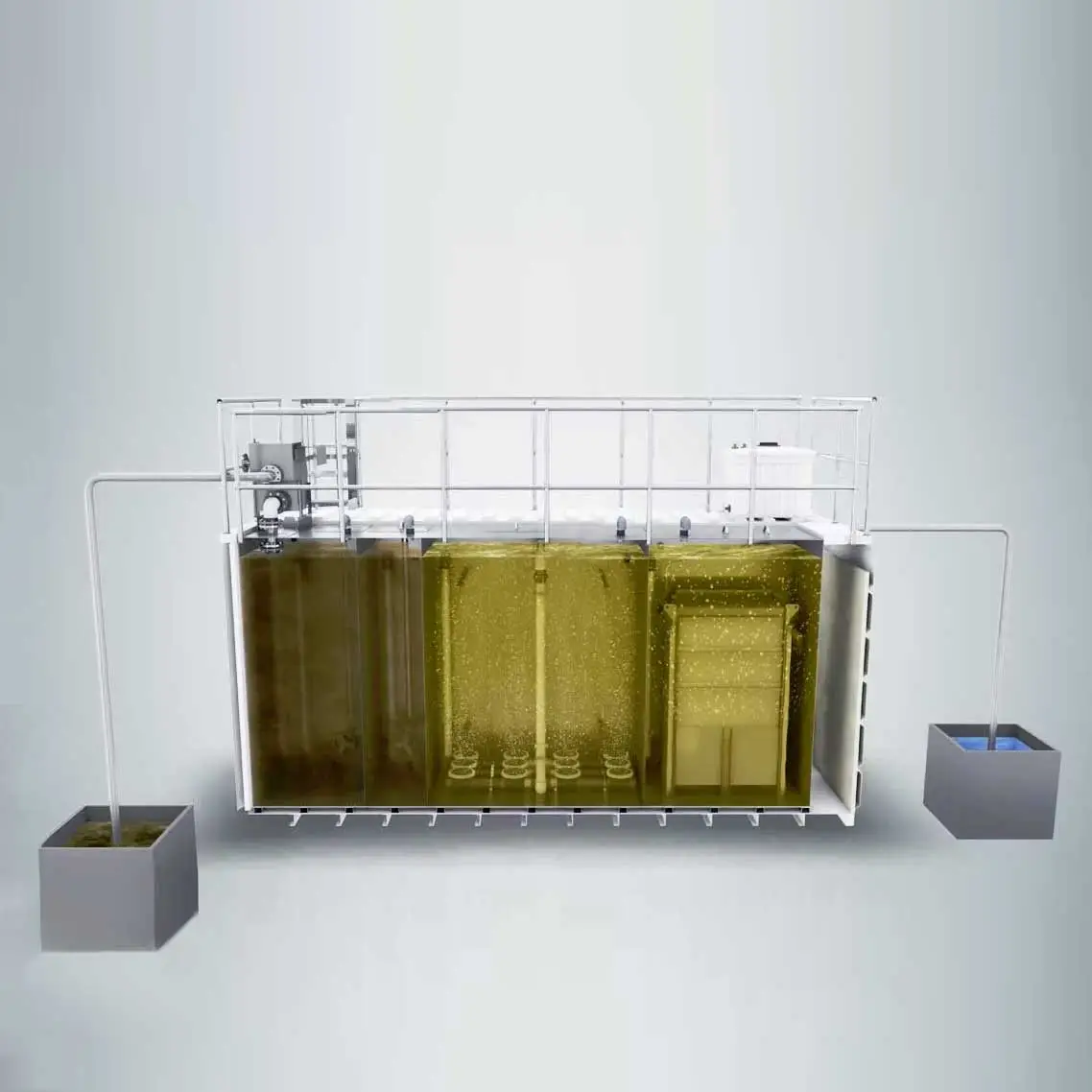
Multi-stage biological purification process MBAS DORABALTEA
Allows managing variations in both hydraulic and organic loads of wastewater from agri-food processing activities. Agri-food wastewater is characterized by high load fluctuations, both up and down, depending on various periods of the year.
Advantages of the MBAS DORABALTEA system:
- Modularity, as the plant can be expanded over time to adapt to changing business needs
- Load-bearing structures, so it is possible to safely transit over them
- Possibility of above-ground installation
- Optimization of installed power to achieve maximum energy savings
- Professional maintenance service tailored to the user
Dorabaltea plants are all certified and CE marked, which is a very important fact because according to regulation 305/2011, to select, design, and install a wastewater treatment plant, attention must be paid to three basic aspects:
- Exclusive use of regulated and CE certified products
- Design in accordance with current regulations regarding discharge systems
- Installation by a qualified company, capable of issuing the Declaration of Conformity as required by DM 37/08
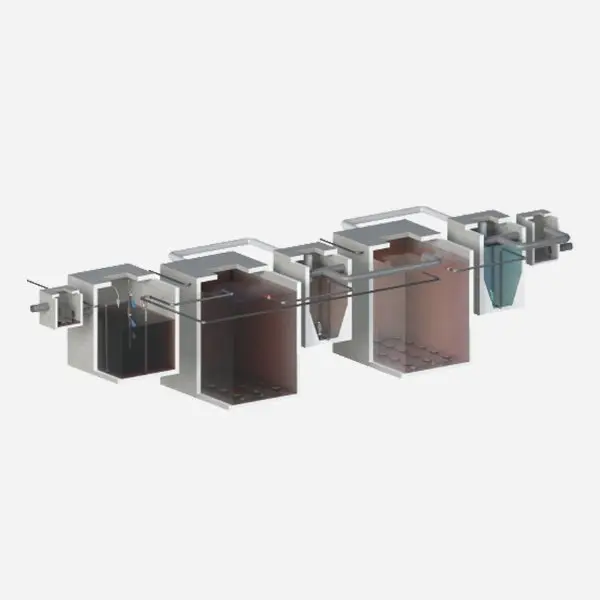
Dorabaltea plants for Industrial Wastewater Treatment:
Fields of Application
Industrial purifiers can be employed in the following fields of application:🥩
The values of pollutants present in wastewater are generally of organic nature, but their degradation requires technical and practical precautions. Therefore, a system for separating fats and suspended solids must be foreseen.
🍷
The wastewater from winemaking activities is characterized by significant discontinuity, both in quantity and in quality of the effluents. In these cases, suitable purification solutions are necessary.
🧀
The wastewater from dairies is characterized by high discontinuity both in quantity and in quality of the effluents. Again, specific industrial wastewater treatment plants must be chosen.
🏕️
In these areas, wastewater is characterized by a very high discontinuity in water quantity, while it is quite uniform in terms of the quality of pollutants dissolved in the effluents.
🛒
In these cases, wastewater is characterized by a very heterogeneous inflow, with high peak loads on weekends and holidays, especially in terms of water quantity, and rather constant in terms of pollutant quality.
🚜
In these cases, wastewater is of different nature and can come from wineries, farms, domestic wastewater, and more. The inflow is continuous over time, both in terms of water quantity and pollutant quality.
🏨
Industrial wastewater can be assimilated to domestic wastewater, and in these cases, biological purification systems can be used, but with technical precautions that optimize their purification efficiency.
🍽️
Even in restaurant activities, industrial wastewater can be assimilated to domestic wastewater, and is characterized by a very discontinuous inflow both in terms of water quantity and dissolved pollutant quality.