Renovation Bonus 2025 for the installation of a wastewater treatment plant: everything you need to know
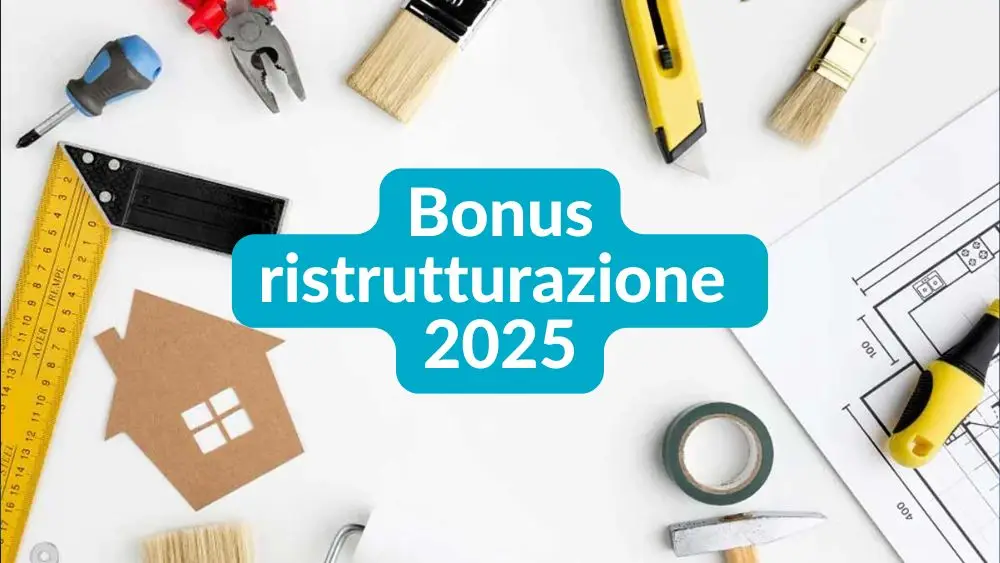
Good news for those considering installing a new wastewater treatment plant: the Renovation Bonus has been confirmed for all of 2025. The bonus recognizes a deduction of expenses on IRPEF incurred with different rates based on the type of housing, up to a maximum of 96,000 euros. The bonus is valid for building renovation, extraordinary and ordinary maintenance, including the installation of wastewater treatment plants. In the following paragraphs, we will analyze the Renovation Bonus 2025: how it works, who is eligible, which works are allowed, the steps to obtain the bonus, and the advantages of a wastewater treatment plant.Renovation Bonus 2025: how does it work?
The Renovation Bonus 2025 is a tax deduction on IRPEF reserved for those who carry out ordinary and extraordinary maintenance work on a condominium or on individual buildings.1. For the primary residence:
- 50% for expenses incurred until December 31, 2025
- 36% for expenses incurred from January 1, 2026, to December 31, 2027
2. For second homes and other types of housing:
- 36% for all of 2025
- 30% from January 1, 2026, to December 31, 2027
The maximum expenditure remains fixed at 96,000 euros, and the deduction must be divided into 10 equal annual installments.
The deduction applies to expenses incurred from June 26, 2012, to December 31, 2025, amounts to 50%, and must be divided into 10 equal annual installments for a maximum expenditure of 96,000 euros. In practice, those who carry out extraordinary maintenance on the drainage system of their home acquire the right to deduct from their tax payments a discount equal to 50% of the incurred expenses. Over time, the bonus has undergone various modifications and extensions. With the Rilancio Decree, the possibility of benefiting from the bonus through invoice discount or credit transfer was introduced. These options were valid until 2022, but today in 2025 they are no longer available. The 2021 Budget Law increased the discount percentage to 50%, while it was previously 36%, and raised the expenditure ceiling to 96,000 euros. Finally, with the new Budget Law, the incentive has been extended until December 31, 2025.Renovation Bonus: Example
Let’s now look at a Renovation Bonus example to understand how much can be saved when purchasing a treatment plant. In practice, the cost incurred for purchasing a treatment system can be deducted from the expenses that a citizen pays in annual installments for 10 years. Let’s assume we have chosen a Dorabaltea purification technology for a house with 6 people, costing €5,000; what happens in this case? The IRPEF deduction amounts to €2,500, so the tax savings correspond to €250 each year for 10 years. In practice, the system actually cost €2,500 instead of €5,000. In practice, the expenses for the treatment system are halved, and we must also add the savings achieved in water terms, as thanks to the treatment plant there is always a supply of water without having to continuously source it elsewhere. A significant advantage from an economic perspective, as this incentive has a much less impactful effect on the family or business budget. Additionally, there is an increase in the economic value of the property, which, being more GREEN and SUSTAINABLE, becomes more attractive on the market.Who is entitled to the deduction?
Who can obtain the Renovation Bonus 2025? All taxpayers who regularly pay income taxes, whether residents or non-residents in Italy. Here is a list of people who can benefit from the tax incentive:- owner or bare owner;
- holder of a real right of enjoyment;
- tenant or borrower;
- members of divided and undivided cooperatives;
- members of simple partnerships;
- individual entrepreneurs, but only for properties that do not fall among those instrumental or merchandise.
- cohabiting family member of the owner or holder of the property subject to the intervention, or the member of a civil union;
- separated spouse assigned the property registered to the other spouse;
- cohabitant more uxorio, not the owner of the property subject to the interventions nor holder of a loan contract, for expenses incurred from January 1, 2016.
What works are allowed?
To have a complete overview, here is a list of works that fall under the tax incentive:- all works listed in the Consolidated Text of legislative and regulatory provisions concerning construction, including extraordinary maintenance interventions, restoration and conservative rehabilitation, and building renovations;
- ordinary maintenance works, extraordinary maintenance, restoration and conservative rehabilitation, and building renovations;
- works deemed necessary for the reconstruction or restoration of properties damaged due to calamities, provided that a state of emergency is declared;
- works aimed at creating garages or parking spaces, even in common ownership;
- works aimed at eliminating architectural barriers;
- works for the creation of any tool intended to facilitate the internal and external mobility of disabled persons through communication, robotics, or any other means of advanced technology;
- works for the removal of asbestos and for the execution of works intended to prevent domestic accidents;
- works intended to implement measures to prevent the risk of illicit acts by third parties;
- works intended for cabling buildings;
- interventions for the replacement of the emergency generator group with state-of-the-art gas emergency generators.
How to obtain the bonus?
Let’s now delve into the more bureaucratic part to correctly submit the application and access the bonus.
To pay the invoices related to the work performed and thus access the deduction, it is necessary to use a speaking bank or postal transfer that must contain:
- the reason for the payment: “Transfer related to construction work that gives the right to the deduction provided for by Article 16-bis of the DPR 917 of 1986”;
- tax code of the beneficiary of the deduction;
- VAT number or tax code of the payment beneficiary.
Advantages of wastewater treatment
From an economic perspective, the advantages derived from the Renovation Bonus, applied to the installation of a treatment plant, are evident. Every expense is halved, and there is the possibility to recover 50% of the investment within 10 years. We must indeed talk about investment, as expenses are recovered and interventions ensure a more virtuous and eco-sustainable reuse of water, significantly reducing water waste. All this translates into water savings, benefiting both personal finances and the surrounding environment. The correct reuse of wastewater also helps to combat one of the long-standing problems of the entire planet, which has negative repercussions on our lives: drought. The low precipitation in recent years has made it even more evident how important water is, a resource that should not be wasted but reused and valued through appropriate treatment plants capable of giving a second life to water itself. Modern wastewater treatment systems, such as those proposed by Dorabaltea, are accessible to everyone because they are very economical. The installation of a Dorabaltea system is quick and cost-effective, thanks to its compact size, reducing space requirements and being completely buried and silent. [gradient_cta]The products of Dorabaltea
Dorabaltea offers effective and eco-sustainable solutions for the reuse of wastewater that include both domestic and industrial plants, which can therefore benefit from the Renovation Bonus to pay only 50% of the expenses. Among the domestic systems are:- Beasy system: treatment and recovery system for gray water from toilets exclusively from the shower and bathroom sink;
- Atlas At Plus system: monoblock system for the biological treatment of wastewater with 100% eco-sustainable natural percolation;
- Atlas Oval Plus-R treatment plant: monoblock system with activated sludge for the treatment of civil wastewater;
- Biowater plant: plant intended for the biological treatment of black and gray wastewater with natural percolation for all users;
- Monoblock plant: monoblock system for the biological treatment of wastewater with 100% eco-sustainable natural percolation;
- DBSET septic tank: septic tank for the primary treatment of wastewater.
- DBTUBE sub-irrigation: drainage system in the sub-surface layers of the soil for treated wastewater;
- Atlas At Oval treatment plant: biological treatment of wastewater with a monoblock system for medium-large users;
- SBR (Sequencing batch reactor): advanced biological treatment of agro-food processing wastewater with a multi-stage system;
- MBAS multi-stage system: advanced biological treatment of agro-food processing wastewater with a multi-stage system;
- membrane biological systems (MBR): advanced biological treatment of agro-food processing wastewater with a multi-stage system.
🏠 BUILDING BONUSES 2025 - 2027: TAKE ADVANTAGE OF THE NEW RATES!
💡 OPPORTUNITY TO SEIZE IMMEDIATELY: ⚡ IMPORTANT NEWS: – ✅ Primary residence: GUARANTEED deduction of 50% until the end of 2025, then 36% until 2027 – ✅ Second homes: 36% deduction for 2025, then 30% until 2027 – 💰 Maximum expenditure for renovation confirmed at €96,000 – 📋 VAT 10% instead of 22% for all Dorabaltea systems🌊 TREATMENT PLANT @DORABALTEA: CONCRETE ADVANTAGES
- Water bill savings
- Water reuse for irrigation
- Compliance with environmental regulations
- Increased property value